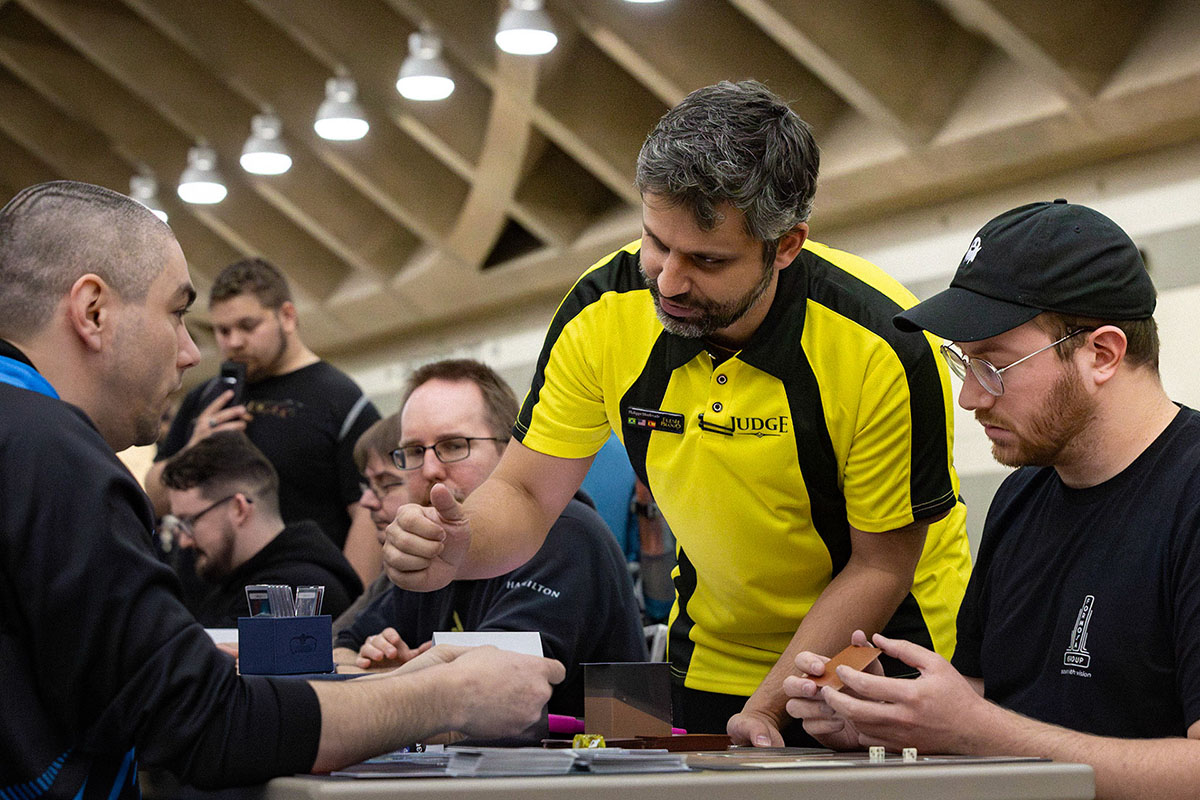

A practical guide to the new World Tour Mentor role: why it exists, what to expect on-site, and how to make the most of it as a Floor Judge, Team Lead, or Head Judge. Written from the perspective of Émilien Wild (Europe Lead, Mentoring & Feedback Team) based on early implementations, and intended as a shared baseline for the experimentation phase as the role evolves.

タグ: Judge Skills
Effectively addressing Slow Play is essential for judges aiming to ensure fair, timely, and enjoyable Flesh and Blood tournaments. This comprehensive guide provides clear definitions, outlines structured penalty approaches for both casual and competitive events, and offers practical advice for detecting and managing Slow Play. By understanding the philosophy and context behind this infraction, judges can confidently maintain smooth tournament operations and foster a positive play environment for everyone involved.
Online discussions—especially those fueled by strong emotions—are rarely productive venues for clarification. Even well-intentioned rule explanations can be twisted, misquoted, or used against you or others. But, when a controversy happens, players will instinctively look to judges for guidance and assurance. What should you do in these situations? Émilien Wild offers his thoughts and reasoning behind choosing when and when not to engage.
If you’re a new or aspiring Flesh and Blood judge, taking your first few judge calls can feel a bit intimidating. Don’t worry – Emilien Wild explains the proper etiquette and procedure for taking judge calls in any setting, from your local PQ to Callings and beyond!