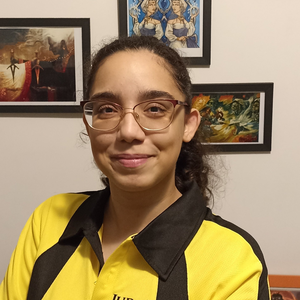
Gabriel Núñez started judging in Chile because someone had to.
FAB was growing slowly in his region, and most players around him were learning the game by feel rather than by the rules. Gabriel wanted to fix that. The instinct toward teaching had always been there. Judging was just the formal version of something he was already doing.
Getting to L2 was an extension of the same thinking. Organized play in Chile is still growing, and the bigger events that require larger judge teams haven’t arrived yet. Gabriel saw L2 as a way of being ready when they do, of making it feasible to run competitive events locally when that moment comes rather than scrambling to build the infrastructure after the fact. The financial reality mattered in the meantime too. Larger events cover travel costs, which means judging internationally becomes viable rather than a personal expense. His mentor Agustin had already shown that this was possible, that the investment paid back.
The motivation was always bigger than the certification itself.
Lu Cordeiro took a quieter road to the same place.
They had been judging card games for almost five years when FAB entered the picture through a release event their employer in Brazil needed to staff. They grabbed an Ira deck, read the rules, and stepped in. The transition felt natural because judging had always felt natural. A friend had introduced them to the world of rules documents and judge conferences years earlier, and they had never really left that world.
Their reason for pursuing L2 was practical, and they made no apology for it. They had been primarily scorekeeping for FAB events and wanted access to a wider range of roles. That was the whole calculation.
What they brought to the process that most candidates don’t is eight years of perspective. In other card games, L2 often implies expertise in mentorship and leadership, a different kind of role that just happens to share the name.
FAB’s definition is more grounded. At its core, it is about being ready to run a 32-person event and handle what comes with it.
The rubric reflects that: consistent rulings, deck checks, player communication, event management. The optional qualities like mentorship, community contribution, and store relationships are recognized, but they are not what the level is built on.
Lu found that clarity refreshing. The process asks for what it says it asks for, and by the time you are pursuing it, most of what it requires has already been accumulating through regular judging. The preparation builds because the work was already happening. The process just makes it legible.
Gabriel’s road had a harder stretch in the middle.
He failed the rules portion of his exam on the first attempt, passing policy but not rules. The waiting period before a retry carried more weight than he had anticipated. Fail three times and the path to retesting changes entirely.
The pressure was real.
He passed on his next attempt and came out the other side with a clear view of what the process asks for: genuine knowledge of the rules and policy, consistent performance at events, and a recommendation earned through actual work.
Not a shortcut.
Not a mystery.
Anyone willing to do that work can get there.
Both of them found less daylight between L1 and L2 than the gap looks from the outside.
Gabriel noticed that the questions coming his way before and after certification were essentially the same. What changed was the confidence behind his answers and the scale of the events he could now be part of. Working within a larger judge team at international events has been the real new territory, learning to rely on people he has just met and to be relied on in return.
Lu is focused on what comes next, regardless of the certification: more floor time, deeper rules knowledge, and a competitive environment that is larger and more varied than what Brazil’s local scene provides. They are also watching the community around them grow in ways that matter. A quarter of Brazil’s L2s are now from the Northeast region. More than half are not from São Paulo. FAB’s support structure made that expansion possible in ways that other games haven’t matched. They find that genuinely satisfying.
For an L1 reading this, Gabriel’s advice is worth sitting with: do the work, learn the rules and policy properly, perform consistently, earn the recommendation. The path is clear. It is not always easy, but it is not obscure either. Anyone who genuinely wants to get there will.
Lu puts it shorter: If you already judge regularly at your local store, you probably have most of what you need. The step from knowing something by instinct to being able to reason through it formally is real, but it is not as large as it looks. You just have to put it together.
What the path to L2 tends to reveal, for those who take it, is that the gap between where they were standing and where they needed to be was smaller than it looked.
The work was already there.
The instinct was already there.
They just had to go find out.
Road to L2 is an ongoing series profiling judges from across the FAB community.Produced by the FAB Judge Program’s Info and Content team. Featured image original art by Jessketchin.