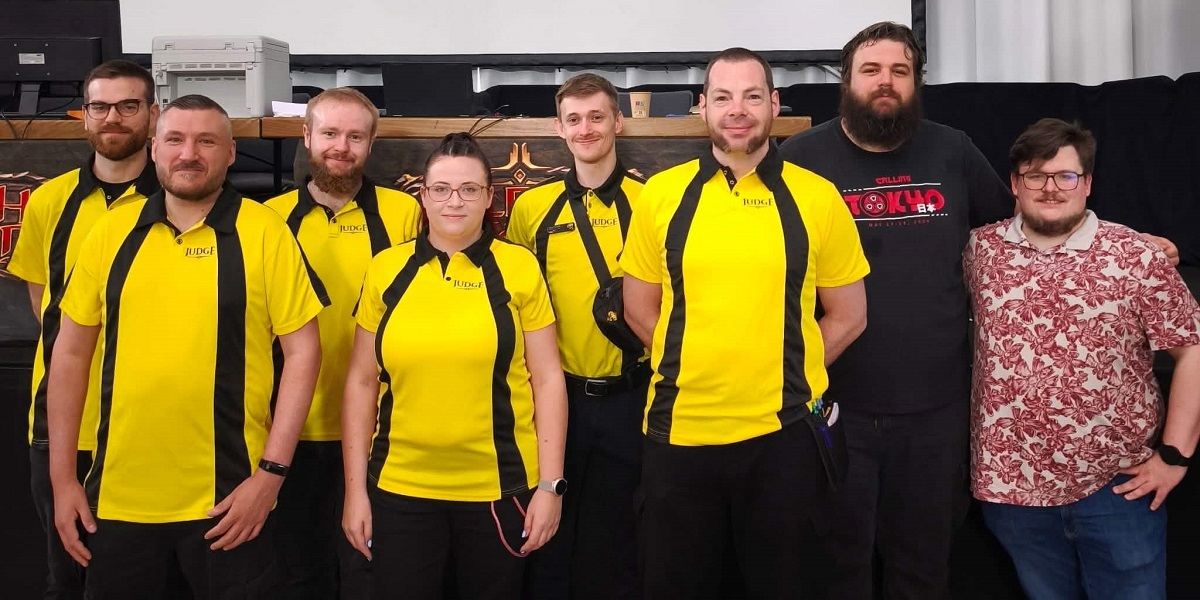
The German-speaking countries just hit the mark of twenty L2 judges and two more are close to reaching their L2, which is a great number. This is not an accident and in this article I want to shine light on what I discovered is responsible for this, and it was not what I was expecting.
The Premier-OP Desert
The German-speaking countries, especially Germany, had a complicated relationship to Trading Card Game tournaments with prize money. This is due to strict regulations on giving out prizes at tournaments that involve luck as a factor. This meant that all tournaments that happened in Germany did not have prize money, which is also the reason why we had no Calling until last year. Last year the German government reconsidered Flesh and Blood with regard to gambling and changed its position from a game of luck to a game of skill.
This opened up the way for big tournaments in the heart of Europe and led to the first Calling in Hamburg. Even though those old times were very frustrating for players, they also impacted our judges. None of us could gather experience outside of ProQuests, Road to Nationals and Nationals. Even though we had many of them, they could not be offered to every interested person in judging. To gain experience and go to bigger tournaments, our judges had to be L2, as it is mandatory for Callings, World Championships and Pro Tours. This motivated many judges to do everything they can and throw their hat into the ring to gain their L2. It was not an ambition, it was a necessity. Judges who could not rely on event experience alone pushed themselves to grow independently: reading articles, studying the rules, and taking the theory seriously. Even though educating yourself plays a big role in growing, one of the biggest motivators is competition, of which we have a lot in our region.
Competitive Community
Our region has always had a high bar for what a good judge looks like. Everyone wants to become THE best judge to judge the biggest events, which created a big competition in a region without own events. This scarcity can turn into rivalry, but our region flipped this on its head and realised that we can only grow if we work together and learn from each other. In the end we will work together on events and rivalry is contraproductive. In addition to that the L2 certification needs a recommendation of an L2. If we all work against each other, our region will never grow.
This led to a growing group of mentors. If you need advice, want to get guidance or just have a question answered, you only need to write a short message and you will find someone who is eager to mentor or accompany you. Those mentors can also gather first experience in leading and giving feedback outside of events. That culture of supporting each other needed a structure to support it, and our former JCR Eser Unger found one: the monthly meetups.
Monthly Meetups
To grow as a community, tight bonds between the judges are crucial, so that they can help each other out and work together closely at big events. To form and strengthen those bonds, our region has (almost) monthly meetups, in which we talk about calls we had, problems we encountered and even private matters. In addition to that, we give a judge the opportunity to hold a presentation. This can help inexperienced judges to gather practical experience and get immediate feedback in a small group with friends around them. We preferably choose L1 judges as presenters, as they may be less experienced and can learn how to present those topics in their native language, build a track record of events in their profile and share their knowledge and opinions from the perspective of an L1.
Why Does This Matter?
You might think: Why does this even matter? How can this help our community? Even though not all points are transferable, it is possible to learn from each other and to try some new things in your region as well. The German-speaking countries’ story is not one of exceptional talent or a lucky head start. You can do this too! Do monthly meetups to create tight bonds within your community. Whatever restrictions your region is working under, turn it into a strength.
Featured image by Wisnu Tan (Truce). Other images provided by Linus Hossfeld.