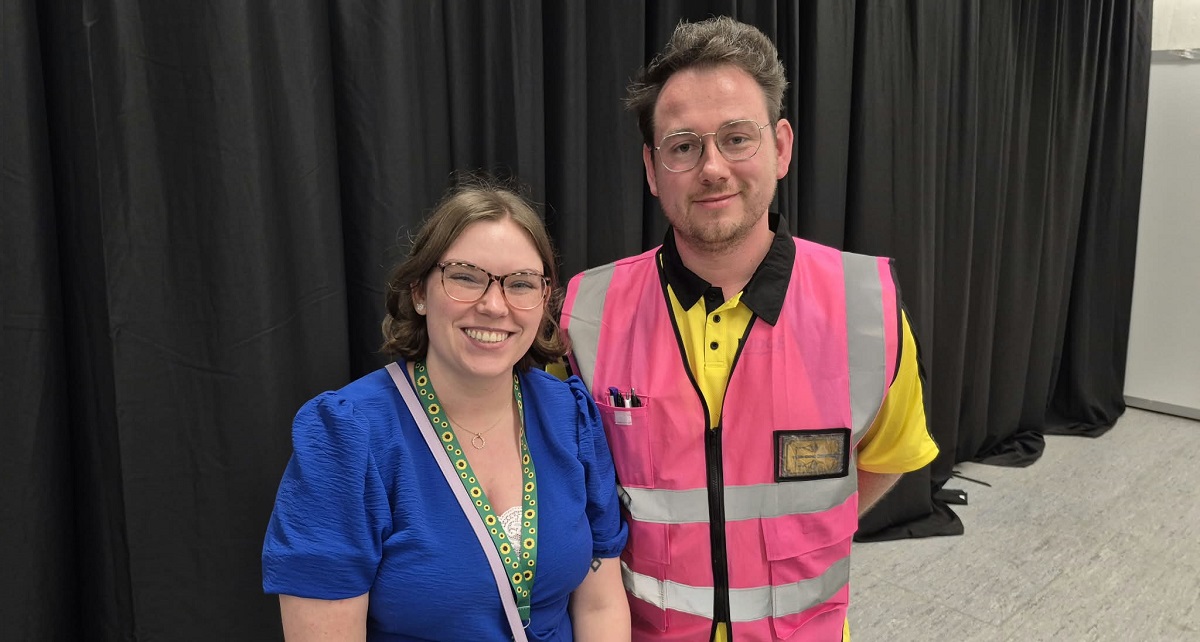
I recognized the lanyard immediately because I have three neurodivergent children and we use the Sunflower ourselves. But I also know that many Judges do not know what it means. That is why I want to explain what the Hidden Disabilities Sunflower means and, just as importantly, what it does not mean.
The Hidden Disabilities Sunflower started at London Gatwick Airport in 2016. The idea was to find a way for people with non-visible disabilities or conditions to show, voluntarily and discreetly, that they may need some extra support, understanding, time or space. This led to the green lanyard with yellow sunflowers.
Today, the Sunflower is used far beyond London and the UK. One thing is important: it is not an ID and it does not tell us someone’s diagnosis. Wearing the Sunflower is voluntary, and not everyone with a hidden disability wears one. Just because someone does not have a lanyard does not mean that they cannot have additional needs.
When we see someone with a Sunflower Lanyard at an event, the only thing we know at first is that they may need support in some situations. We do not know what that support might be. It could be about noise or crowds, standing for a long time, unexpected touch, or communication in a stressful situation. But these are only examples. Any of these could apply, but none of them have to.
There is no typical person with a non-visible disability. Even two people with the same diagnosis can have completely different needs. That is exactly why “Any of these could apply, but none of them have to” fits so well for me. The lanyard makes us aware. Nothing more at first.
For me, the most important thing is: Ask instead of assume.
If we think someone might need support, we can simply ask. We should also give them the time they need to answer. At a busy and loud event, a situation can sometimes become emotional. In that case, it helps if we stay calm and do not immediately interpret a delayed answer or a lack of eye contact as disinterest or rudeness. Unexpected touch can also be uncomfortable. This does not only apply to the person, but also to their personal belongings. If we are unsure, we can simply ask before touching something.
Of course, as Judges we cannot spend a long time supporting one person during an event. At larger events, this is where the Experience Coordinator can help. We can take care of the immediate situation and involve the Experience Coordinator if more support is needed.