Get Them Swinging: What Gen Con 2026 Taught Us About Teaching Flesh and Blood
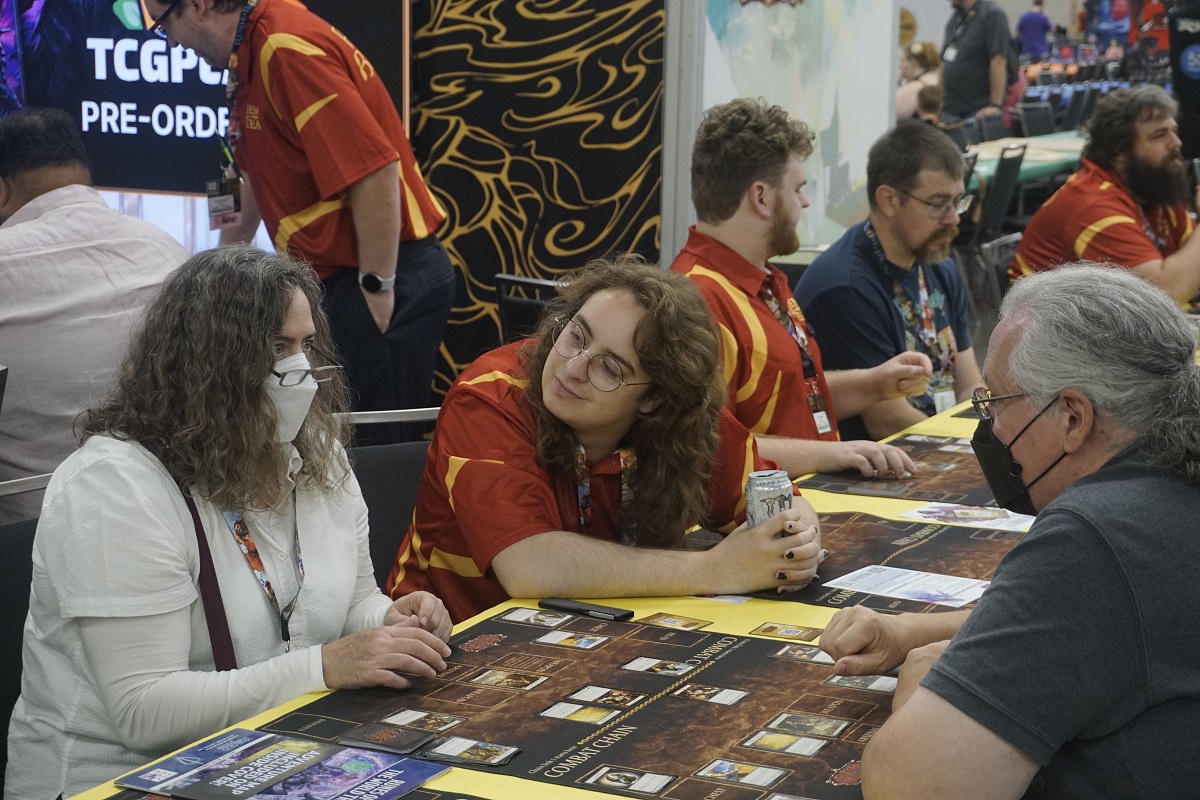
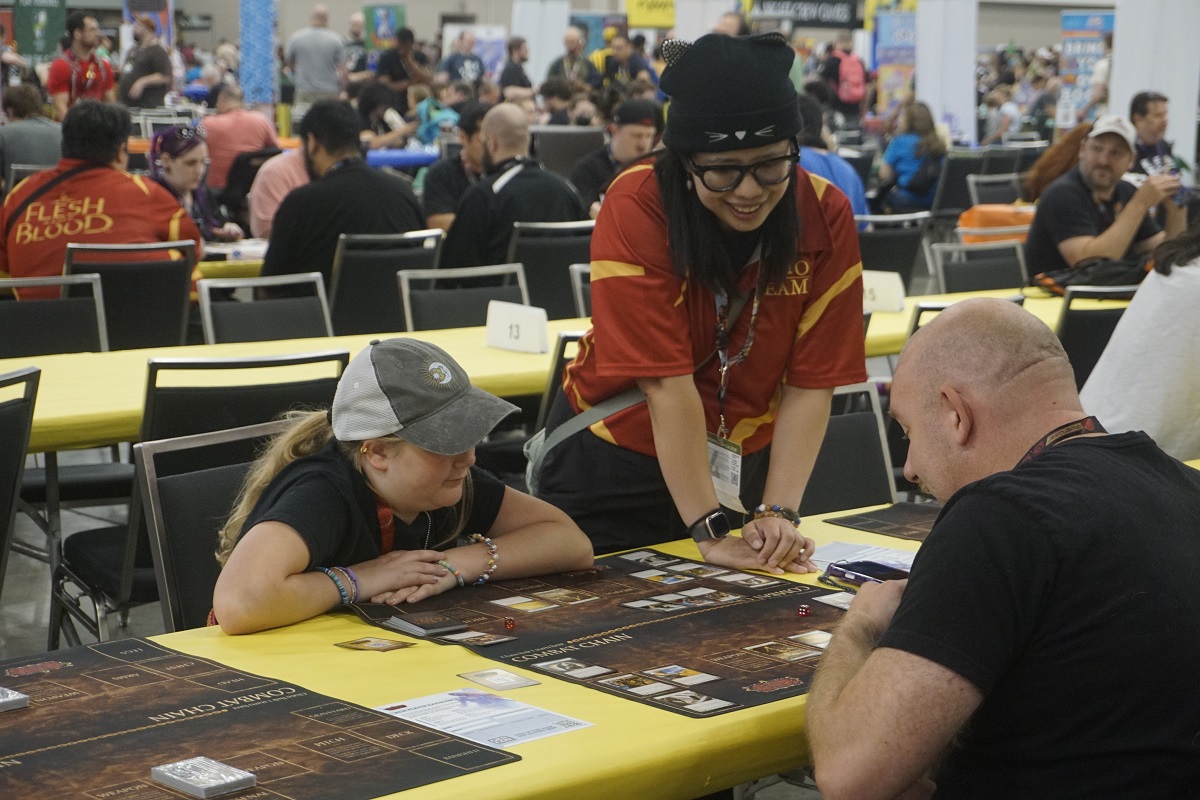
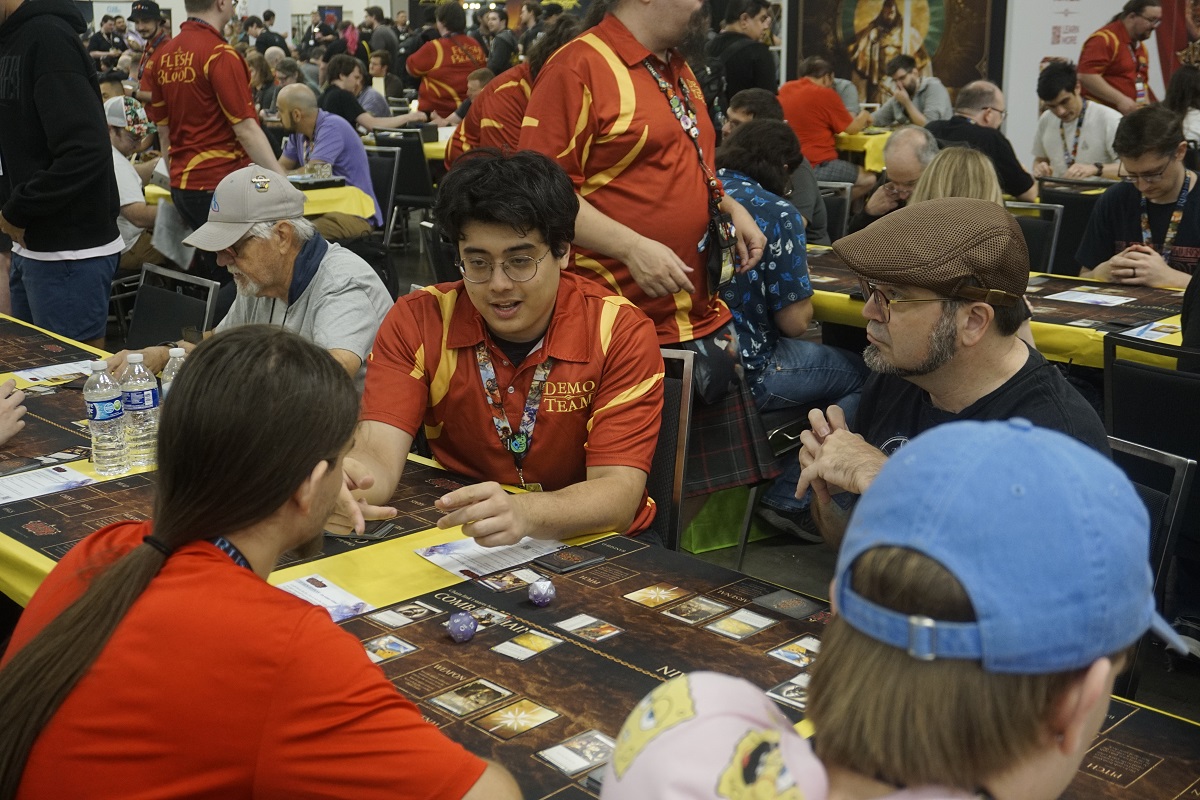
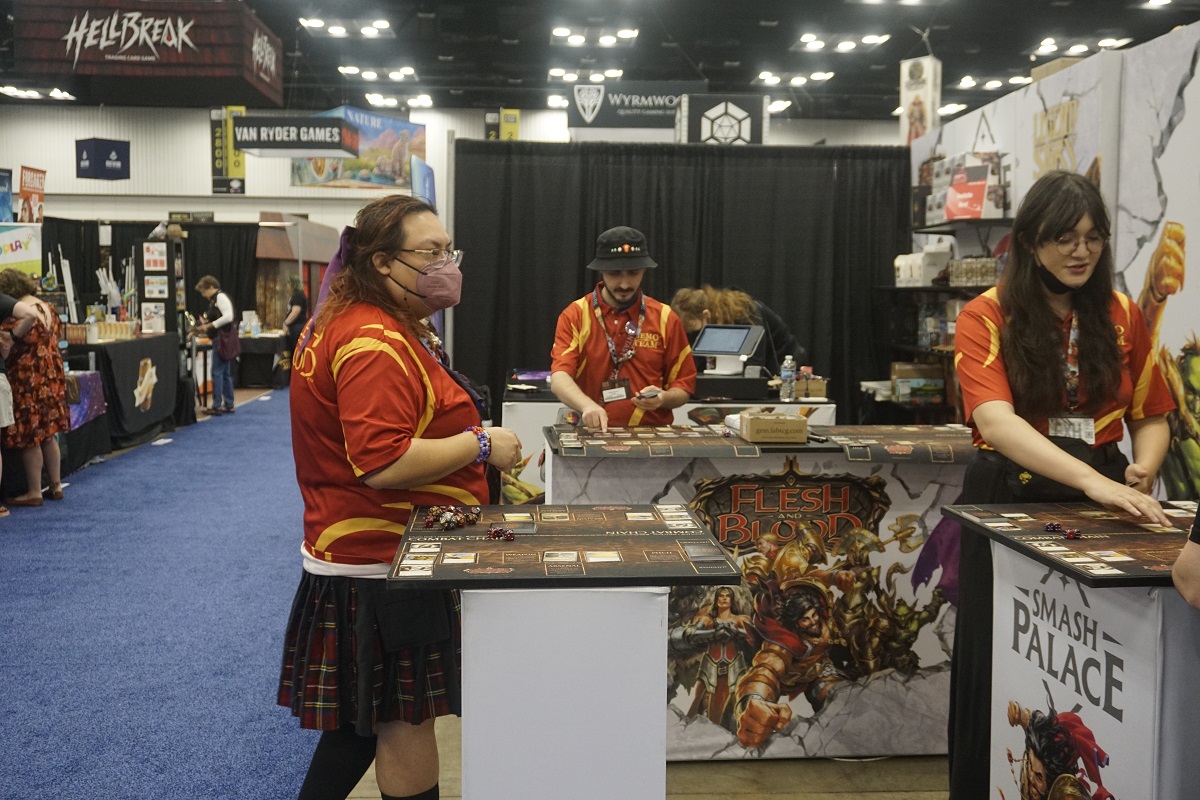
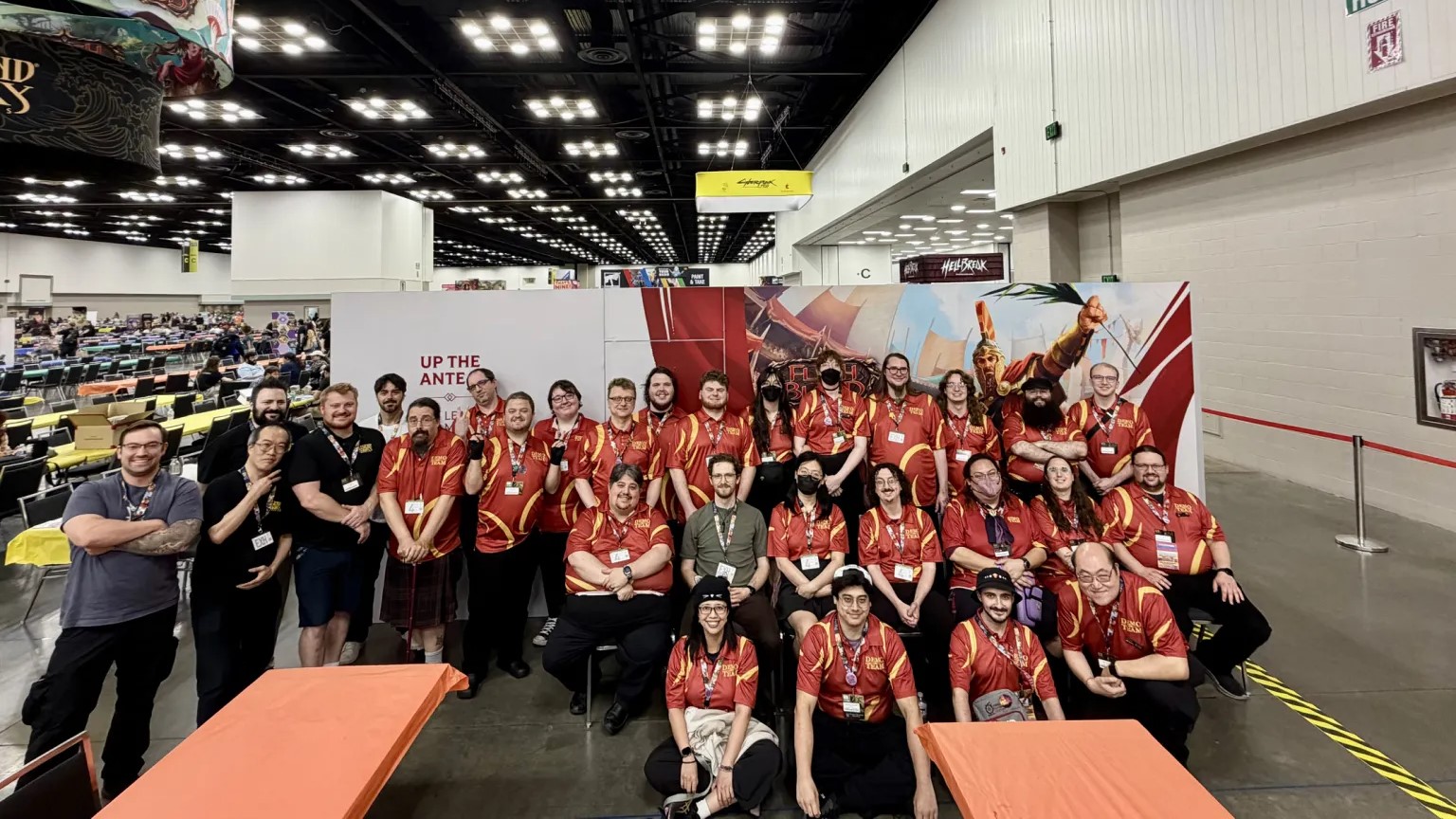
A full crew of judges worked the Learn to Play booth at Gen Con 2026, across the Expo Hall demo tables and the scheduled events in the main hall. Afterward, seven of them answered the same short set of questions. Everything below comes from those answers. None of it is theory. All of it is something one of them lived at a table this August, with a stranger, a demo deck, and about ten minutes.
The Moment It Clicks
David Schmidt was in the main hall, running a demo, explaining how Boltyn works to the player across the table: how he channels the gods through his soul for strength, and uses his deck to charge that faith. Her face lit up. The brain went click. She exclaimed, “That makes so much sense. That’s really cool!”
“It was in that moment I knew I made the right decision to be on the team,” David said. That reaction is the whole job. Everything that follows is about earning it more often.
Get Them Playing First
The single lesson every judge came back with: put cards in hands before you explain anything.
Jose Guillermo Regueiro arrived at Gen Con teaching the old way. “I used to teach in a mechanical way: the anatomy of the cards, the different types, the phases of the turn, the combat chain, deckbuilding restrictions, even the Living Legend system, all before a player could swing their Edge of Autumn for the first time.” The direct approach changed his mind completely. “Getting players swinging Dawnblade in the first minute of the demo was fantastic. You introduce mechanics like the Arsenal, Non-attack Actions, and Go Again far more naturally, and players are engaged immediately instead of sitting through a lengthy explanation before they reach the fun.” He put a name to it: “Show, don’t tell is a wonderful adage that applies just as well to teaching a game as it does to filmmaking.”
Norah Abushahma found the same thing. “This weekend taught me a lot about the importance of just getting cards in the player’s hands and going straight into the action.”
So did Ryan Castilla, who is taking it home with him. “The act of getting them attacking immediately and responding to the core loop of the game I feel greatly enhances the learning experience for the game, and it is something I plan to push from now on.”
Madeline Abernathy framed why the booth demands it, when the kitchen table does not. “Teaching the game to your friends over the kitchen table is one thing. Doing a ten minute demo in a busy expo hall is another.” Her fix is the tactile experience first, the strategy second. “After two turns of quick and dirty play, you can start to get a little more technical if the players want that extra layer.”
Keep It Short
Getting them playing fast only works if you also let them stop fast. Two judges learned the length lesson the direct way.
David ran full games out of enthusiasm. “Each demo I ran was essentially a full 20 health game. I did this because we were using the warrior L2P decks, and I love warriors, so I wanted that passion to shine through.” His plan for next time: “walk through a scripted turn or two before jumping into a full game.”
Sebastian Bednarski reached the same conclusion from the design side. “I like the idea of less life in the demo. We want to spark interest, and if they like it, send them toward Silver Age.”
Read the Room
Short and fast is the default. The skill is knowing when a player wants more, and when they want less.
Jose Guillermo caught himself giving more than was asked. “I love the mechanics that branch out of the rules, so I sometimes let the designer in me run off and wax lyrical. A couple of players had to stop me and ask me to just give them enough system knowledge to keep playing. They had asked a question I read as an invitation to go in-depth, and I ran with it. Next time I will read the room better.”
The reverse happens too. Norah watched a competitive player from another card game grasp the hard concepts almost instantly, “the ideas of fatigue states, the risk and reward of blocking,” and walk away asking about formats. Ryan sat down a player late on Saturday night whose first language was not English, and found the demo landed anyway: the player told him “the explanations were clear and understandable.” Same booth, same weekend, three completely different players. The job is listening for which one is in front of you. As Madeline put it, watching Gen Con’s sheer range of people come through, “it’s our job to really listen and teach and understand.”
When It Goes Sideways
Every judge had a table that did not go smoothly. This is the part worth reading twice if you are nervous about applying, because the veterans have these too.
Sebastian hit a wall. “I had to explain the action point concept, and the player just was not getting it. I explained it three or four different ways and nothing landed. I felt like I had failed him.” His plan is not to give up on the concept, but to change tools. “Today I would reach for props, dice maybe, and try one more time.”
Norah had a player mix up resources and action points, get visibly upset, and wish for a rulebook on site. Her answer was procedural and calm. “I would slow down the demo a bit to review the difference more clearly than I did in the moment,” and confirm understanding before moving on.
Madeline drew a pair who arrived already soured by a bad demo elsewhere, feeling that a previous teacher had skipped key details like armor and the arsenal. She re-taught them from the ground up, asking questions so she would not repeat what they already knew. “They were grumpy the whole time, but at the end, they thanked me and said they at least understood the game this time.” Her reflection is the sharp one: today she would “focus more on making today’s demo fun, and less on apologizing for their previous poor experience.”
Sometimes there is no save, and that is allowed. David had a player who simply did not connect with the game. “I thanked him for at least giving it a try and wished him well on his weekend.” The practical read: when a player is not connecting after a genuine try, do not grind the demo out to prove a point. End it warmly and promptly. That spares the player and frees the station for the next person who wants to be there.
Madeline had worked L2P booths before and assumed this one would run easy. “I was humbled.” The takeaway for experienced booth judges: prior events at smaller scale do not carry you through Gen Con on their own. The volume and the range of players are a different animal, so come ready to adapt your teaching rather than to run your usual script on autopilot.
Lean On Your Team and Your Tools
No judge does this alone, and the ones who leaned on their crew had the best weekends.
Erick Leong was running a scheduled L2P for twelve players when one pair started sinking. “Rather than let them fall behind, I asked for help, and Bear gave that table the white-glove treatment while the rest of us carried on. They turned out to be brand new to card games and needed the full time to absorb the basics.” What surprised Erick most about the weekend was exactly this reflex in others: “how collaborative my fellow judges were, sharing input to help shape the scheduled L2P as we hit challenges.”
David felt it as rhythm. “We were passing off demo stations and rotating around like gears in a well-oiled machine. Knowing they had my back and I had theirs made the time seem like nothing at all.”
And bring tools. Erick’s practical note: “Teaching aids help. Dice and pens make the game’s many moving parts easier to track.”
Why It Matters Past the Booth
A demo is ten minutes. Where it points a player can last years.
Jose Guillermo watched two competitive players from another game light up when he mentioned the World Tour. “I rarely got to talk about the competitive side this weekend, and it is one of the things I love most about the game, so getting people interested in that side felt impactful.” Norah taught a competitive player and his mother, and left thinking “it seemed quite likely we would see this player in our own tournament circuit in the not too distant future.” Ryan’s Saturday-night player caught fire on one specific fact: “how excited he was to find out that Flesh and Blood is not a game that is only played in North America and Europe, but that there is pro level play in his region of Asia as well.”
And sometimes the point is smaller than competition, and just as good. Madeline taught a father and son who leaned into the familial rivalry, the son sneaking in lethal, the pair jamming again later while the dad chased his revenge. “It doesn’t exactly scream family game. But for the right family, it can light a spark, and that’s special.”
Just Apply
Every judge was asked what they would say to someone hesitating to work their first booth. They agreed.
Norah: “Just go for it!” The players you teach, competitive or not, “will walk away excited about the game and have the resources they need to connect with their community.”
Sebastian: “It is not for everybody, but if you love the game and want to share it, it is worth a try.”
Erick: “If you love the game, sharing it won’t feel like work. Even if you are shy, that perspective helps draw out fellow shy players.”
Jose Guillermo: “Teaching people to play is a wonderful exercise in community building, and it develops communication and interpersonal skills that competitive judging does not always call on. It has made me more outgoing, and it has been deeply rewarding every time.”
David remembers the fear and how fast it burned off. “Before the weekend, I felt unprepared and scared I would say the wrong thing or get tongue-tied. After the first demo, everything clicked.” His verdict: “It’s honestly not as bad as you think it’ll be.”
Encouragement only helps if you act on it. Watch the event listings at JudgeHub, and the moment an event opens L2P staffing, apply. Booths fill fast, and applying early is what puts you on one.
Madeline will get the last word, because she also has the most useful advice in the whole article. “Do you have a passion for Flesh and Blood and want to share it with people? Yes? Good. You have everything you need to apply to a L2P booth.”
“Bring some throat drops though. Your voice will be exhausted by the end of the weekend!”

Photos by Erick Leong and Émilien Wild.